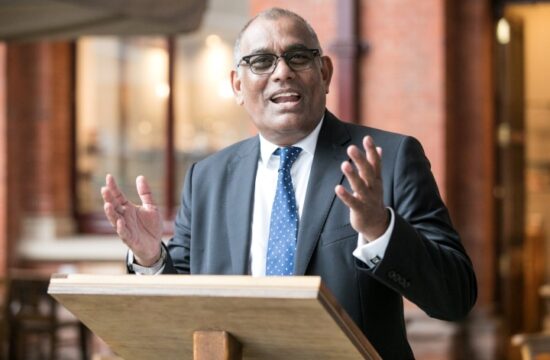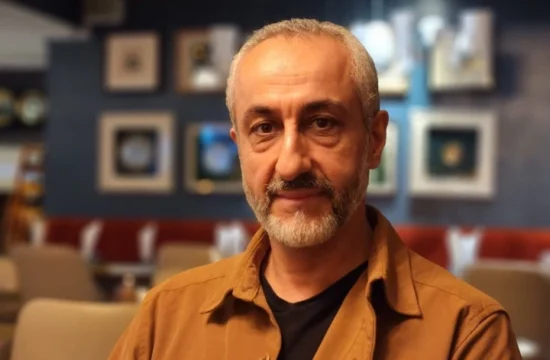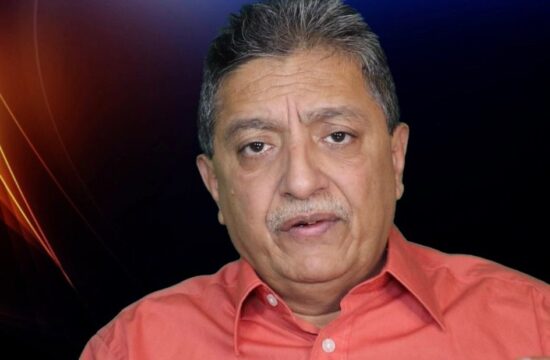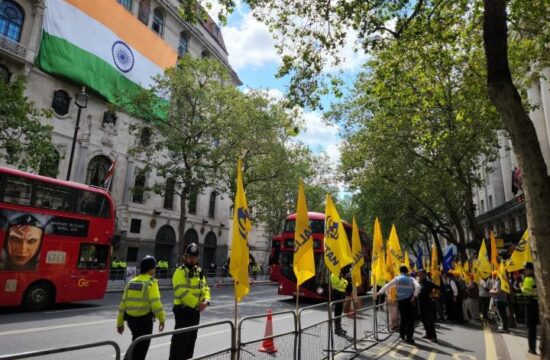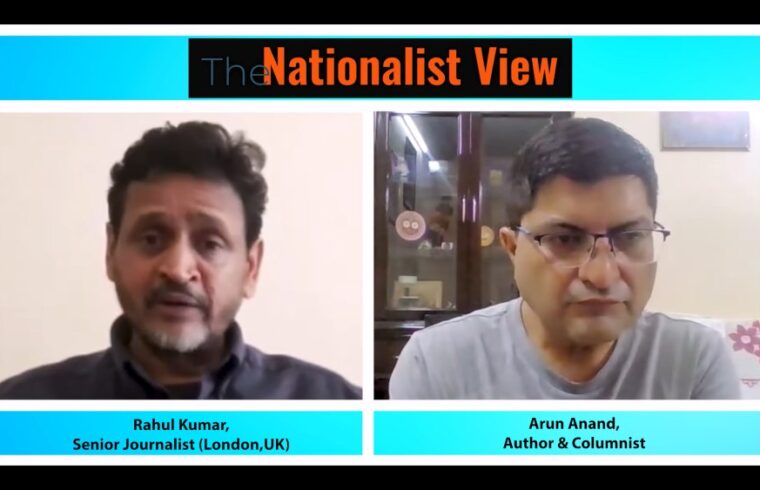
Hi friends, welcome to this latest podcast of The Nationalist View. Today we have with us a special guest Rahul Kumar. His area of specialisation is Balochistan. Today we talk about Operation Sindoor and the surge in the Baloch freedom movement. I want to know if the two are interlinked? Rahul Ji, what’s your take on this?
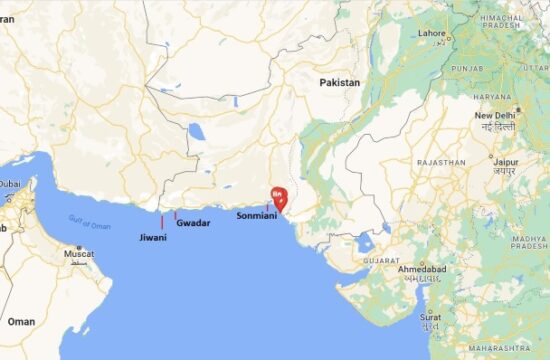
Thank you for inviting me on your show. The Baloch insurgency has been going on since 1948, but even before that, the Khan of Kalat was in talks with the British government and with Muhammad Ali Jinnah for an independent Balochistan.
Lately, after Operation Sindhur, Balochistan came into the spotlight in a big way. I think I can ascribe two reasons for this: one, on May 7 as India launched Operation Sindoor, there were major attacks in Balochistan — about 10 to 12 Pakistani soldiers were killed. This spotlighted the Baloch issue. Secondly, the Baloch nationalist organisations have strong public relations, communications, and advocacy wings, especially in Western countries. They were swift in issuing information and building a narrative around their freedom movement while India and Pakistan were in the spotlight.
The Baloch organisations realised that India and Pakistan are in the news and it was an opportunistic moment for them. The attacks in Balochistan on the day of Operation Sindoor have nothing to do with India, and nothing to do with Operation Sindoor because the Baloch freedom struggle has been ongoing.
The podcast can be viewed here.
You rightly mentioned about the Baloch network, especially their diaspora. Many of these organisations came out in support of India during Operation Sindoor. Several Baloch leaders, whether on social media or officially, supported India. But they also complain that India is not supporting the Baloch movement as it should — maybe morally, but not logistically. What sense are you getting?
The Baloch diaspora is very small — nothing as compared to the Pakistani diaspora. We are talking about merely hundreds or a few thousand Baloch scattered in Europe and the US. The Baloch who are settled abroad have escaped imprisonment, torture, and human rights violations. We need to give credit to the Western countries who have given shelter to the Baloch facing persecution even if they have not supported the independence struggle in Balochistan.
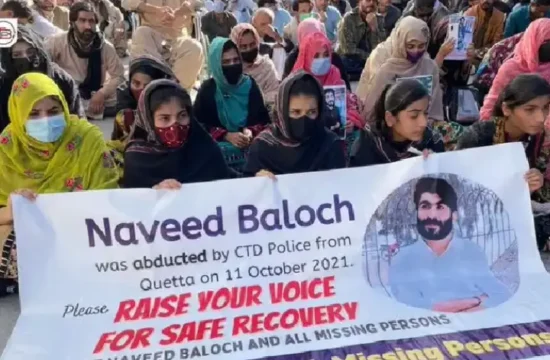
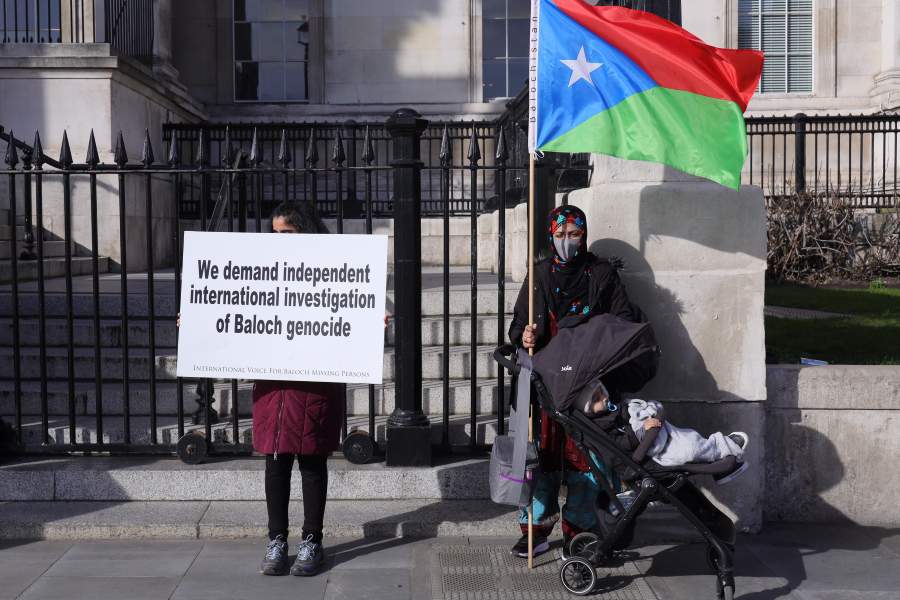
These Baloch people have built a strong, effective communications campaign and network with European policymakers and also the masses to highlight the extent of enforced disappearances and torture in Balochistan. They have designations like ‘the foreign affairs spokesperson’ or ‘ambassador of the Baloch movement’ of a certain organisation. They are building linkages with members of the parliament in the countries that they are living in and also with the members of the European parliament so that the MPs know about the extent of human rights violations by Pakistan, and the torture that the Baloch people undergo in prisons. Something heinous happening in Balochistan – you keep coming across bodies of dead people strewn all over the Baloch landscape. The Baloch have been kidnapped, tortured, and their bodies have been thrown.
Post Pahalgam, we have seen a doctrinal shift in India’s approach towards terrorism and, towards Pakistan. Do you think it is time India should re-evaluate and maybe play a more active role in supporting the Baloch struggle?
As for expectations from India, the Baloch indeed expect much more than moral support. They are nostalgic about India and expect a lot from India because they feel that India is the only country in South Asia that can support their cause. The Baloch are largely believed to be secular and deeply into the Left ideology also, which is the opposite of what Pakistan as a country is and, also in terms of its governance.
On the other hand, there is cultural nostalgia — many Baloch originally came from Maharashtra, and their language Brahui is close to South Indian languages. Also, what is little known is that a large population of the Baloch live in India, both Hindu and Muslim, but they keep a low profile. A lot of Baloch history is deeply intertwined with the Indian people and Indian culture.
Regarding Operation Sindoor — since January 2025 there have been major incidents in which the Pakistani Army had to take a bad beating. In January, 14 Pakistani soldiers were killed in an attack by the Baloch Liberation Army (BLA); in February another big attack took place; in March we had this global news that an entire train, the Jaffar Express, was hijacked by the insurgents. What was important on that train was that many people were Pakistani security forces in civilian clothing and dozens of them were killed in the hijack. How the Pakistani government has put this information is that innocent civilians were killed and this is how Pakistan manages a narrative in its favor.
Should India re-evaluate its position? Since 1947, Pakistan has used terror groups along with its army to terrorise India, and it has not mounted any response since then. India responded only in 2016, 2019 and now in 2025. I think what India can certainly do is to lend a sympathetic ear towards the Baloch cause, raise the issue of human rights violations on international platforms, and push for investigations under the UN about the enforced disappearances, the torture, and the killings of Baloch youth. Development indicators in Balochistan are at rock bottom — education, women’s rights, healthcare, access to electricity and water.
These are worse than Sub-Saharan Africa and these issues India should push with urgency in bilateral discussions with partners or friendly nations. This remains a principled stand from India where it is not creating an insurgency or a conflict in the region. We are not in for any bloodshed but I think we need to listen to what the Baloch are saying about human rights violations.
Rahul ji, it was an interesting discussion. Thank you very much. We’ll end this conversation here but continue discussing this complex issue in future episodes. Thank you for watching.
It was nice to be interviewed by The Nationalist View. Towards the end I would like to say that the world and the global media need to look at Balochistan more critically. Whatever happens there will have big geopolitical implications for South Asia, Central Asia, the Gulf region, and China. Thank you very much for inviting me for the talk.