The 1971 Indo-Pak war started after the Pakistani Air Force launched strikes on 11 Indian airbases on 3 December 1971. For India, this was a two-front war as its forces were arrayed on the Western and the Eastern frontiers.
It was a decisive war as the three armed forces fought together and all gained momentous victories against Pakistan on land, water and air. It was a cultural break-up of Pakistan as the West Pakistan-dominated Punjabi Muslims held the Bengali Muslims in contempt owing to their distinct cultural and linguistic identity.
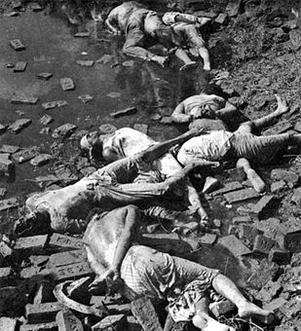
West Pakistani forces indulged in unimaginable brutalities against their own people in East Pakistan. As the Pakistani Army initiated a genocide on the Bengalis, particularly the minority Hindu, the Bangladesh Liberation War started.
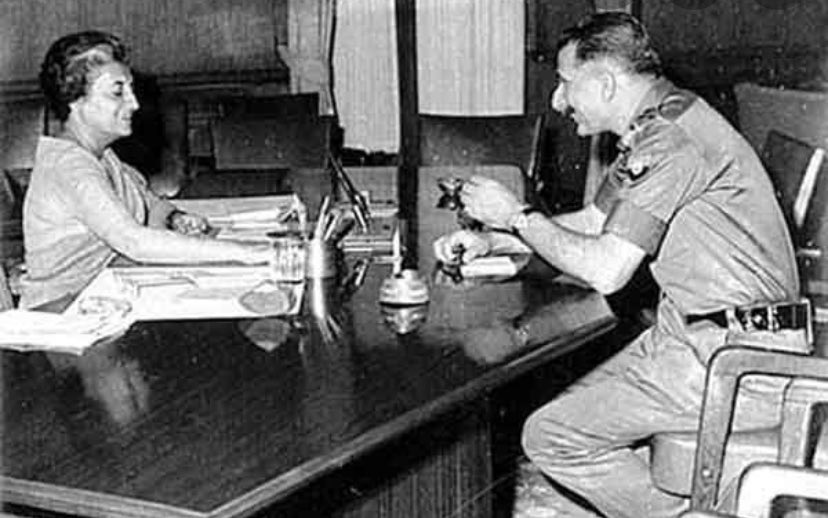
As millions of people from East Pakistan fled to India, Prime Minister Indira Gandhi decided to intervene. India began training the Mukti Bahini guerrillas against the Pakistani army.
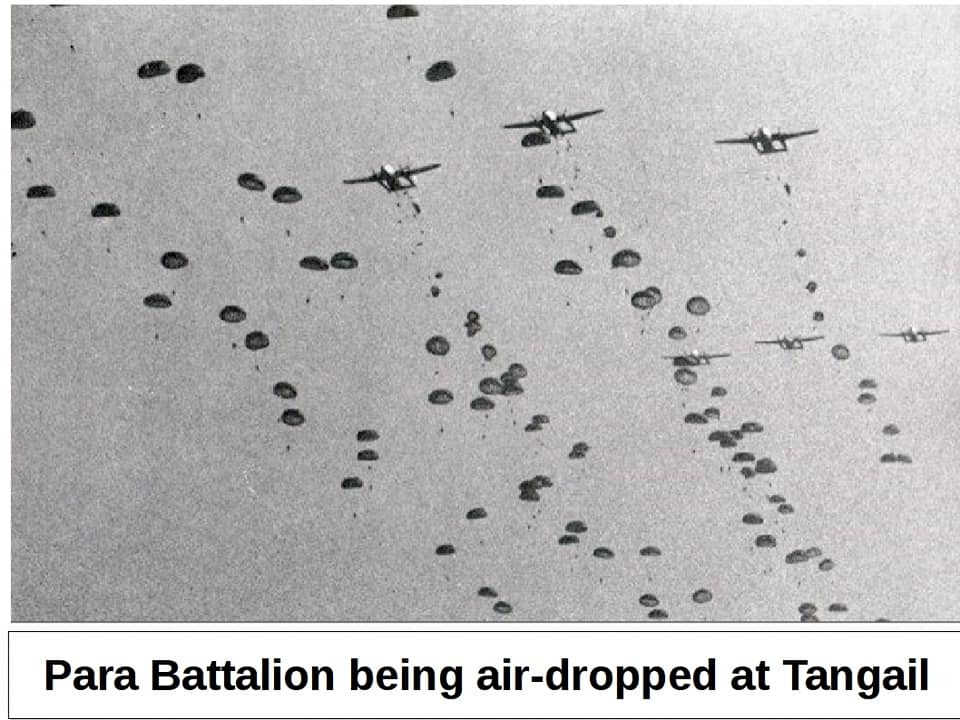
The Indian Air Force begins its attack after Pakistani Air Force launched air strikes on 11 Indian airbases on 3 December 1971. It also dropped soldiers inside East Pakistan.
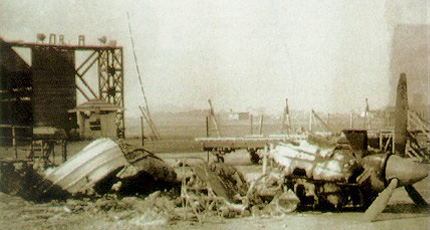
The Pakistani Air Force hangar at the Dhaka airfield after a strike by the IAF.
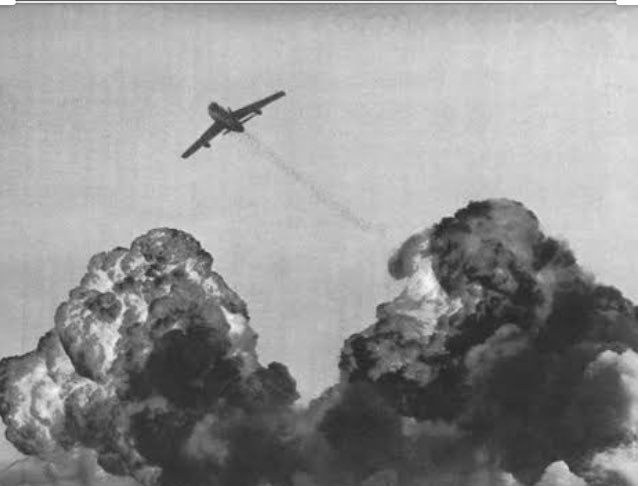
The Karachi harbour was completely devastated and Pakistan lost the much-feared submarine Ghazi. The war resulted in the creation of a new country Bangladesh.
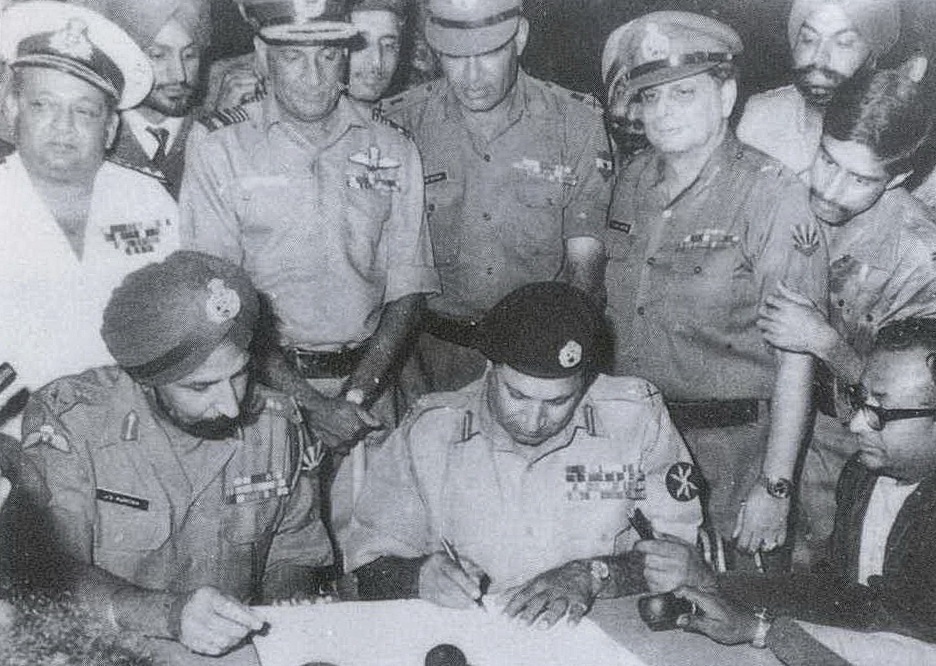
Pakistan’s General AK Niazi surrendered on 16 December 1971 in Dhaka in the presence of Lt. General JS Aurora.A short swift war, it ended after 93,000 Pakistani troops surrendered – the largest ever after World War-II.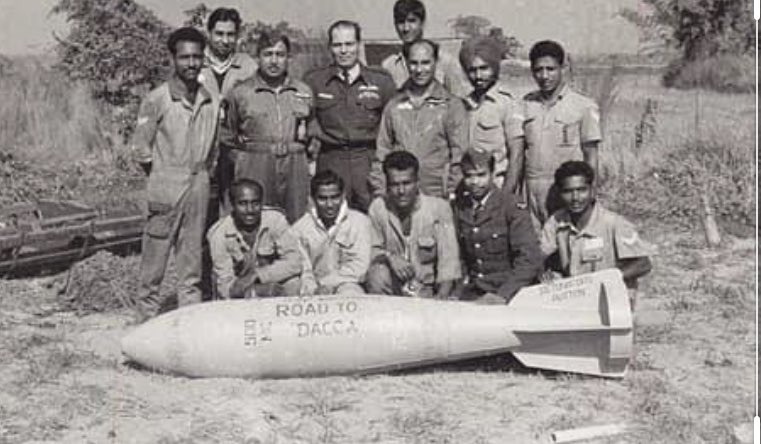
IAF officers pose during the 1971 Indo-Pak war.
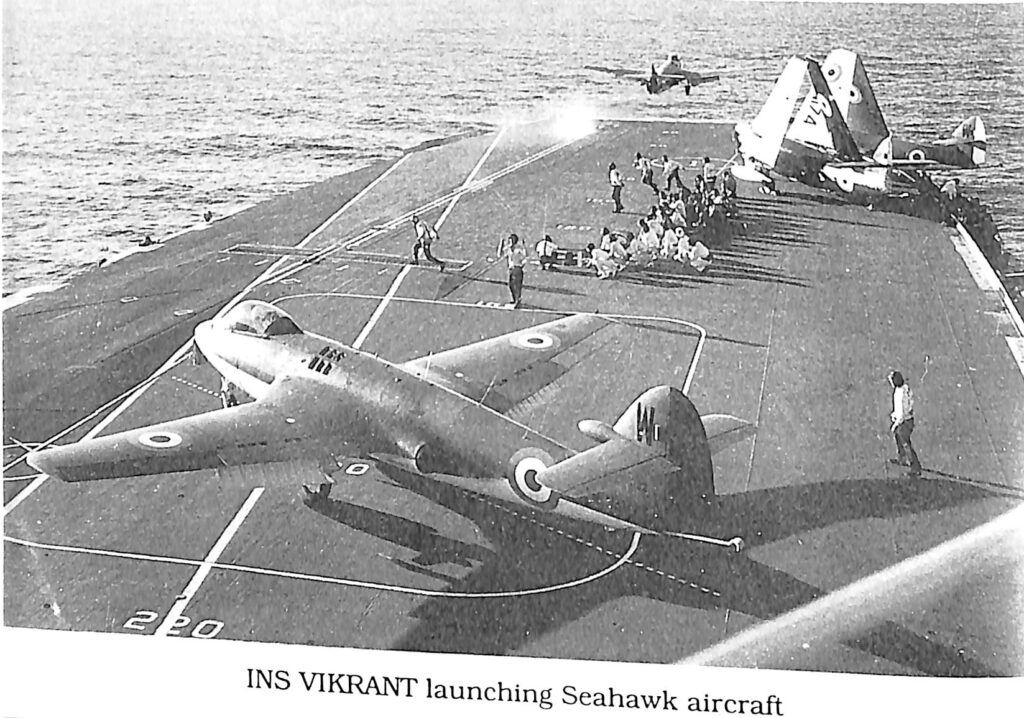
The Indian Navy’s majestic INS Vikrant aircraft carrier played a decisive role in the eastern theatre of the Indo-Pak war of 1971. Its aircraft wreaked havoc on forces stationed in East Pakistan. The Ghazi submarine of the Pakistani navy had no match in India. The much-feared submarine eventually sank near Vishakhapatnam while hunting for Indian targets.
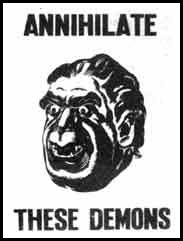
An iconic poster by Quamrul Hassan on General Yahya Khan which represents the Pakistani military as demons. One of the reasons why Indian forces won a decisive victory was the strategic planning. Thanks to General Sam Manekshaw who persuaded the then Prime Minister Indira Gandhi successfully for time and planning the war effort.
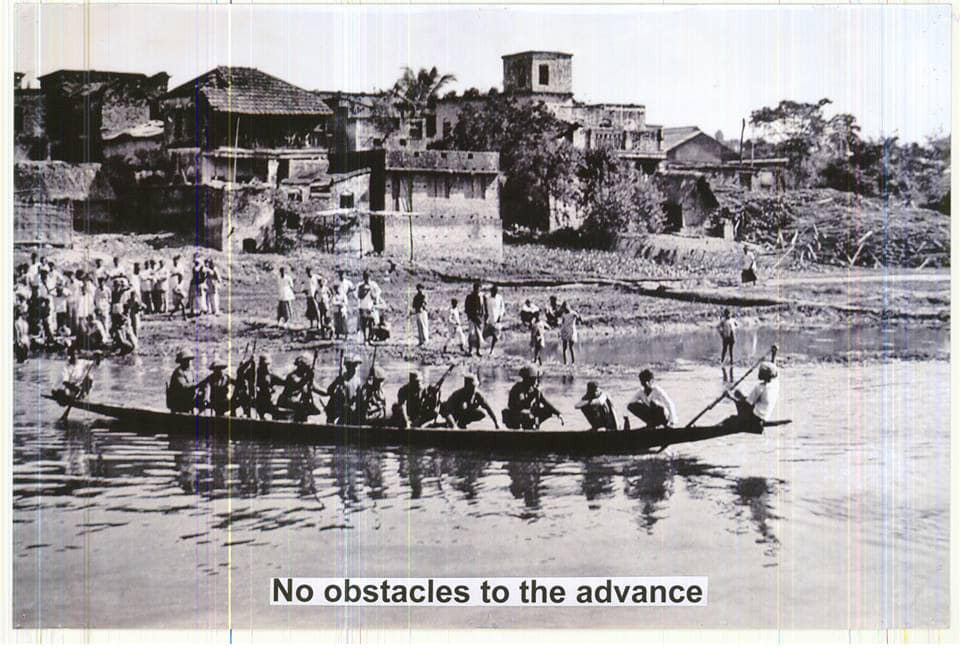 There was no stopping Indian troops as they tore into Pakistani defences in both the Western and the Eastern sectors. In East Pakistan, the Indians were helped by the volunteers of the Mukti Bahini.
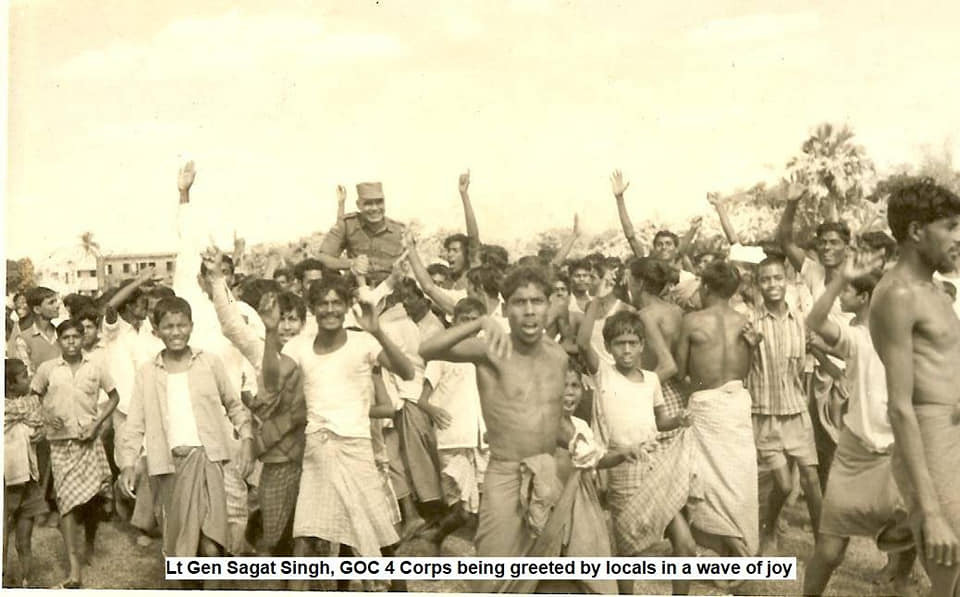 The people in East Pakistan cheered Indian soldiers. They give a rousing welcome to an Indian Army officer, Lt. General Sagat Singh.
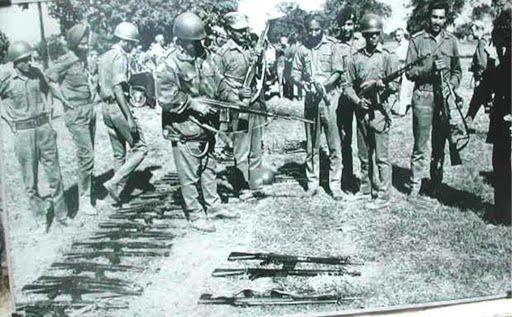
Pakistani Army soldiers lay down their weapons en masse in East Pakistan. The defining moment when Pakistan agreed to a surrender and gave India the largest number of Prisoners of War (PoWs) since World War-II.
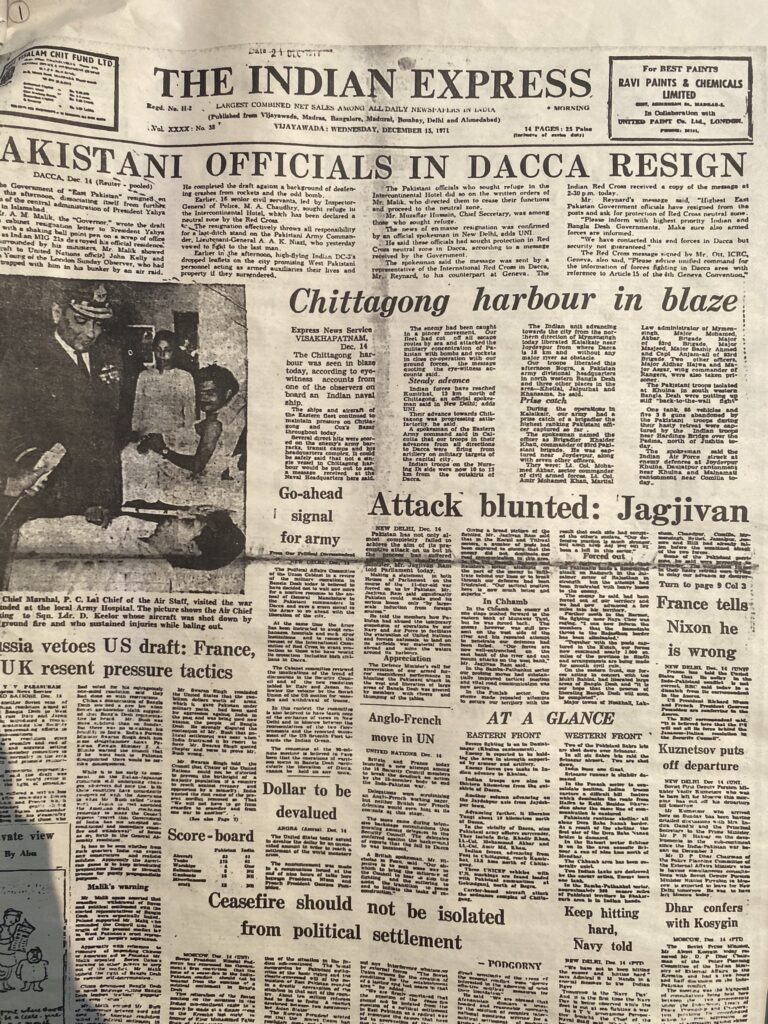 The news of the surrender by Pakistan troops is reported in banner headlines.
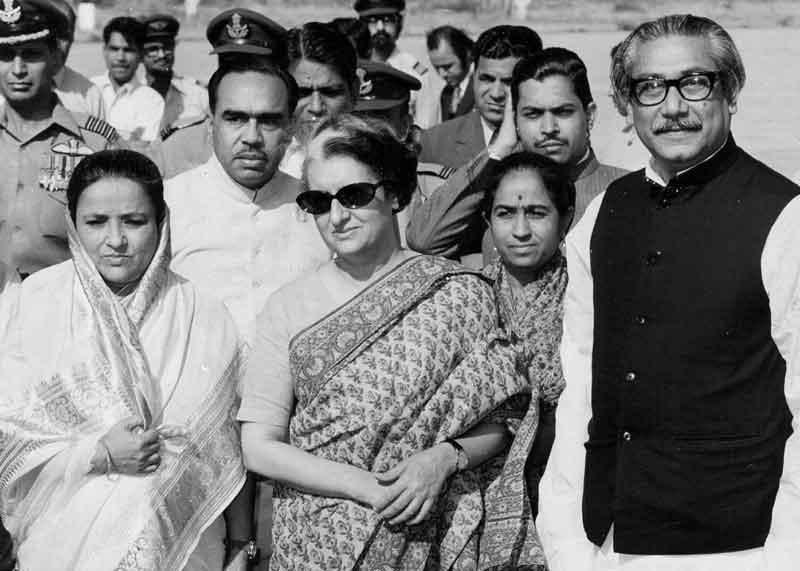 In this picture Sheikh Mujibur Rahman is seen with Indian Prime Minister Indira Gandhi. After his release from a prison in Pakistan, Rahman, popularly called Bangabandhu, became the first Prime Minister of a new country Bangladesh.
(This article was first published on India Narrative)